A COLEÇÃO DE MOLUSCOS E EQUINOIDES (FORMAÇÃO ROMUALDO, CRETÁCEO, BACIA DO ARARIPE) NO MUSEU DE PALEONTOLOGIA PLÁCIDO CIDADE NUVENS, UNIVERSIDADE REGIONAL DO CARIRI, SANTANA DO CARIRI, CE
Keywords:
paleoinvertebrates, Romualdo Formation, Cretaceous, taxonomy, curationAbstract
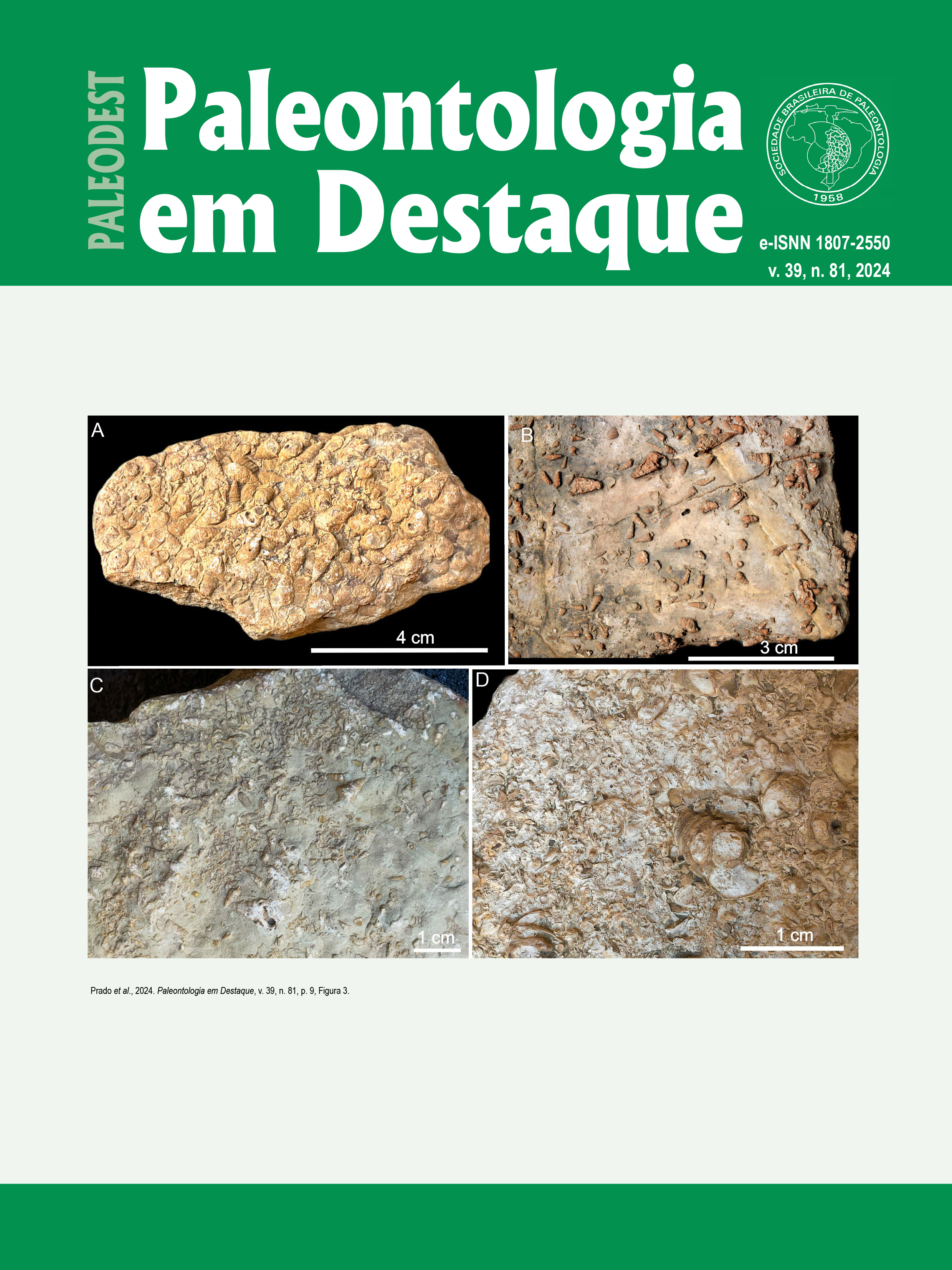
The Museum de Paleontologia Plácido Cidade Nuvens (MPPCN) of Universidade Regional do Cariri is located in the municipality of Santana do Cariri, in the south of the state of Ceará. It constitutes an important national guard and research center for the Araripe Basin, mainly for the Crato and Romualdo formations, known worldwide for the great diversity of species and excellent degree of preservation (Konservat-Lagerstätten). Molluscs and echinoids are abundant in the Romualdo Formation, being found in quantity in the MPPCN collection. To contribute to the organization of the collection and publicize part of the diversity of paleoinvertebrates in the MPPCN, all specimens deposited in the collection were listed and taxonomically identified. A total of 1.574 samples were analyzed, including isolated specimens and fossil concentrations, grouped into 111 registration numbers. Most of them have no geographic origin and correspond to shell beds. Molluscs represent 97% of the registration numbers (94% with gastropods and 73% with bivalves) and echinoids only 3%. In 89% of the gastropod numbers there are Cassiopidae, 69% Cerithiidae, 9% Naticidae and 1% Epitoniidae. As for bivalves, in 46% of the samples are found Mytilidae, 9% Corbulidae, 3% Veneridae, 4% Lucinidae and 12% Bakevelliidae. All echinoids correspond to Bothryopneustes araripensis. It is noted that a good part of the diversity of paleoinvertebrates described in the literature for the Romualdo Formation is represented in the MPPCN collection, being an important source of consultation for carrying out future paleontological projects.